Lisa Mealand Psychotherapy
Psychotherapy & Counselling in Belper, Derbyshire & online
Welcome to Lisa Mealand Psychotherapy & Counselling in Belper, Derbyshire & online
Integrative, Relational Psychotherapy and Counselling
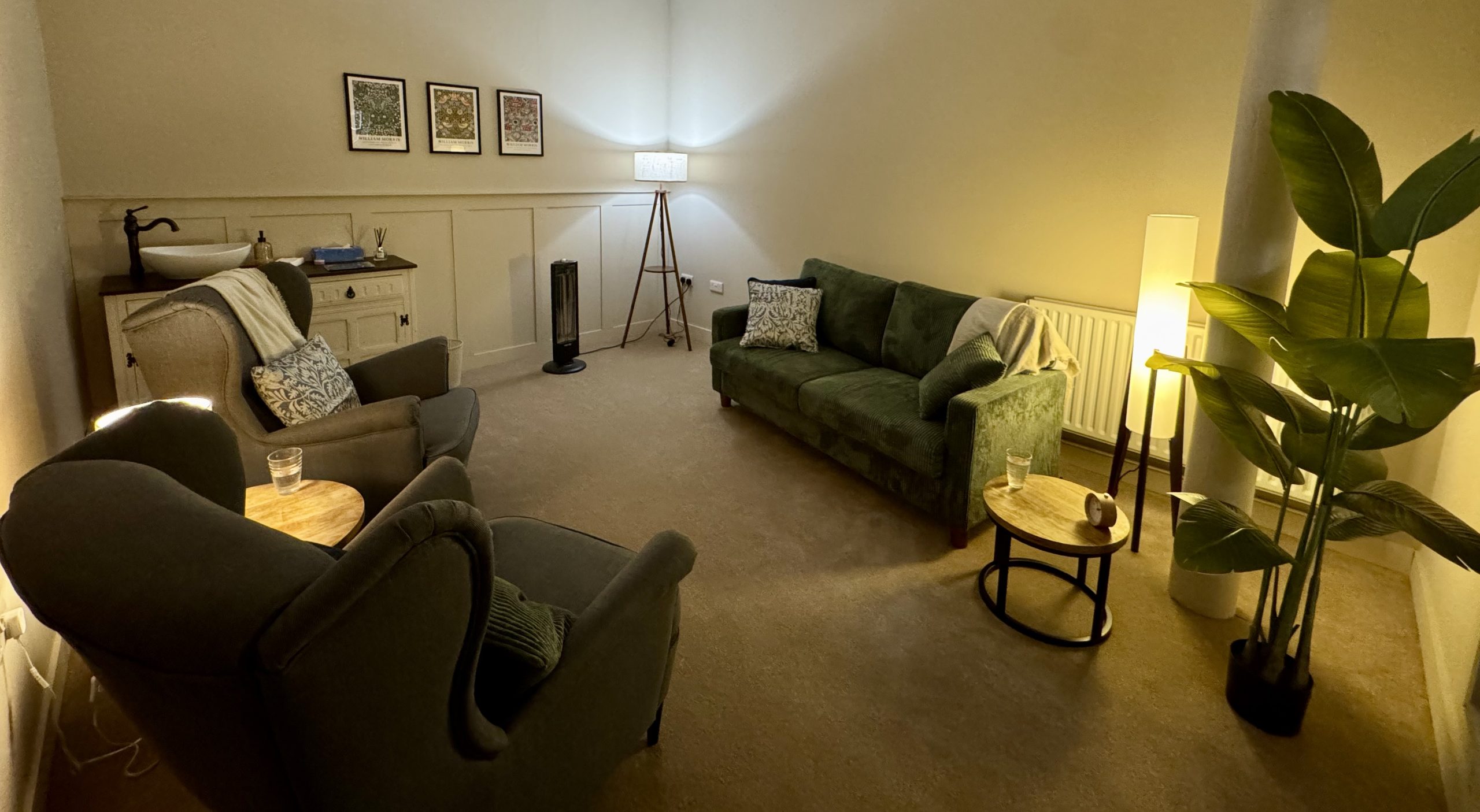
Psychotherapy and counselling in a safe, comfortable and private setting
Welcome. I am an integrative therapist in advanced clinical training, holding a postgraduate diploma from the Sherwood Psychotherapy Training Institute, and am a registered member of the BACP and UKCP trainee. I hold undergraduate and postgraduate qualifications in Psychology, and have spent a number of years working in forensic settings. More recently, I have been working with clients experiencing trauma and PTSD.
I work with adults seeking personal therapy, offering face-to-face sessions in Belper and Matlock.
A little about me, I live with my family and three dogs, and we all love walking in the Peak District.


Qualifications
- Pg Diploma in Integrative Psychotherapy (Sherwood Psychotherapy Training Institute - Staffordshire University)
- Post Graduate Psychology (Nottingham University)
- BSc (Hons) Psychology (Southampton University)
Integrative Approach
I work integratively, drawing on relational and developmental understanding to help you understand yourself and your relationships. As everyone is unique, I tailor therapy to your individual needs. Together, exploring what’s happening now and how earlier experiences may still be shaping how you feel today. I offer support in developing greater self-understanding, acceptance and change.
Beginning Therapy Together
It’s natural to feel nervous about starting therapy. Sharing personal thoughts and feelings can feel like a big step. I offer a calm, safe, supportive space where we explore at your own pace, building trust and checking in regularly so your needs are met.
Counselling Support
in Belper, Matlock, Derbyshire & online
Psychotherapy and counselling can be helpful if you identify difficulties with:
Anxiety
Mild to moderate depression
Sleep issues
Trauma
C/PTSD
Abuse
Loneliness
Feeling 'stuck'
Relationship issues
Family issues
Parenting
Birth trauma
Peer relationships
Pregnancy, prenatal and postpartum
Grief.
Unresolved difficulties from the past, such as a school history/bullying
Boarding school survival
Life transitions
Self esteem
Self harming
Peer relationships
Stress
Estrangement from family
My Location
I work from DE56 1WN Belper, Derbyshire and see clients from Alfreton and Ripley.
In addition to providing face-to-face therapy, I also offer telephone counselling and online sessions for clients across the UK.
Contact me to find out more about how online therapy works.
Availability & Fees
I offer unlimited counselling and ask clients to consider attending a minimum of six sessions with a review to consider if further sessions would be beneficial.
My fee is £50 for a one-hour session. I accept cash at the time of appointment or bank transfer.
I have availability day and evenings.
Please contact me to arrange a free 15 minute introductory call.
Cancellation Policy
I have a cancellation policy in place, where I ask for 48 hours' notice if a client is unable to attend. After which, there is a charge for the missed session.
Get in touch
Please contact me below if you have questions or to arrange a free 15-minute introductory phone call. You can also contact me on 07519 807961. I am happy to discuss any queries or questions you may have prior to arranging an initial appointment.
All enquires are usually answered within 24 hours, and all contact is strictly confidential and uses secure phone and email services.
Some frequently asked questions
I adhere to the professional codes of ethics set out by both the BACP and UKCP. A central part of this is my commitment to confidentiality — I understand the importance of privacy and discretion when exploring sensitive and personal issues.
We will discuss confidentiality in more detail during your initial assessment, and you’ll receive a written agreement outlining what we’ve discussed, ensuring everything is clear and transparent from the start.
Counselling can be helpful for everyone, but it’s important to find a counsellor who feels like the right fit for you. The relationship between therapist and client is at the heart of the work — without that sense of trust and connection, therapy can feel slow or unhelpful.
The best way to know if it feels right is to trust your own sense of comfort and safety within the relationship, and to notice what begins to shift in the first few weeks. Research shows that when therapy is a good fit, most people start to feel small signs of change within the first six sessions, even though deeper work often takes longer.
The terms counselling and psychotherapy are often used interchangeably, though they can sometimes refer to different levels of depth or duration. Counselling is typically associated with shorter-term, time-limited work focused on specific issues. In contrast, psychotherapy is often longer-term and aims to explore underlying patterns, past experiences, and deeper emotional processes.
In practice, both are forms of talking therapy, and the distinctions between them are often subtle. Psychotherapists typically hold a Master’s degree in their field. What matters most is finding an approach and a therapist that feels right for you. I am trained to work at varying levels of depth and duration, tailoring the process to meet your individual needs.
Therapy isn’t about being told what to do. As therapists, we don’t offer direct advice or tell you how to handle a particular situation. However, where it feels appropriate, I may share insights from my professional experience or suggest other sources of practical support that could be helpful — though there’s never any expectation or obligation to follow these suggestions.
The real value of therapy lies in being deeply listened to and supported to make sense of your experiences in your own way. My role is to help you clarify what matters most to you, so that you can make your own choices and move forward with greater confidence and self-awareness.
For those who are unable to attend sessions in person, I also offer online counselling via video call. This can be a convenient option if you work shifts, have limited mobility, live further afield in the UK, or are based abroad. Online sessions provide the same level of care and confidentiality as face-to-face therapy, allowing you to access support from home.
You are always free to end counselling at any time. However, planning an ending together can be an important part of the process. It allows time to reflect on what you’ve gained, recognise the changes you’ve made, and consider the supports you have in place as you move forward.
For short-term work, this may mean spending one or two sessions preparing to end. For longer-term therapy, I usually recommend allowing around four to six sessions — sometimes more — to ensure the ending feels thoughtful, contained, and complete.